

矯正視力検査
矯正視力検査 (visual acuity testing:英)
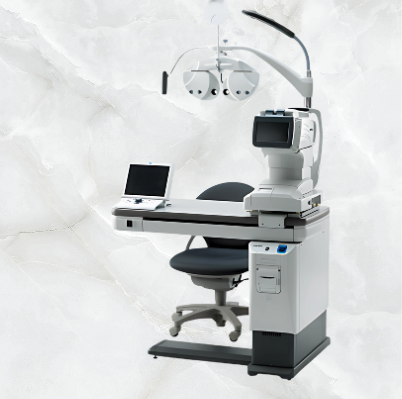
矯正視力(きょうせいしりょく)検査とは、メガネやコンタクトレンズのレンズを使って、近視・遠視・乱視などの「屈折異常」をカバーした状態で、その目が本来持っている「最大限の見る力」を測る検査です。
単に視力を測るだけでなく、目の病気がないかを判断するための非常に重要な検査です。
A Corrected Visual Acuity (kyosei shiryoku) test is an examination that measures the "maximum seeing potential" inherent to an eye. This is done while correcting for "refractive errors" such as nearsightedness (myopia), farsightedness (hyperopia), and astigmatism using glasses or contact lenses.
It is an extremely important test that goes beyond simply measuring vision; it is also used to determine the presence of eye diseases.
単に視力を測るだけでなく、目の病気がないかを判断するための非常に重要な検査です。
A Corrected Visual Acuity (kyosei shiryoku) test is an examination that measures the "maximum seeing potential" inherent to an eye. This is done while correcting for "refractive errors" such as nearsightedness (myopia), farsightedness (hyperopia), and astigmatism using glasses or contact lenses.
It is an extremely important test that goes beyond simply measuring vision; it is also used to determine the presence of eye diseases.
1. 裸眼視力との違い
Difference from Uncorrected Visual Acuity
・裸眼(らがん)視力: 何もつけない状態での視力。生活の不便さを知る目安。
・矯正(きょうせい)視力: 最適なレンズを当てた状態での視力。「目の健康診断」としての意味合いが強い数値です。
・Uncorrected (Naked-eye) Visual Acuity: Vision without any assistance. It serves as a guide for understanding daily inconveniences.
・Corrected Visual Acuity: Vision measured while using the optimal lenses. This value has significant meaning as a "medical check-up for the eyes".
・矯正(きょうせい)視力: 最適なレンズを当てた状態での視力。「目の健康診断」としての意味合いが強い数値です。
・Uncorrected (Naked-eye) Visual Acuity: Vision without any assistance. It serves as a guide for understanding daily inconveniences.
・Corrected Visual Acuity: Vision measured while using the optimal lenses. This value has significant meaning as a "medical check-up for the eyes".
2. なぜ矯正視力を測るのか?
Why Measure Corrected Visual Acuity?
眼科医が最も注目するのは、裸眼視力よりもこの「矯正視力」です。
・病気の発見: どんなに度数の強いレンズを入れても視力が上がらない(例:0.7以下など)場合、単なる近視ではなく、白内障、緑内障、網膜の病気などが隠れている可能性が高いと判断されます。
・視機能の評価: 目そのものが「はっきり見る能力」をどれくらい備えているかを確認します。
Ophthalmologists pay much closer attention to "Corrected Visual Acuity" than to uncorrected vision.
・Detecting Disease: If vision does not improve even with strong lenses (e.g., remaining below 0.7), it is judged that there is a high possibility of underlying conditions such as cataracts, glaucoma, or retinal diseases, rather than simple nearsightedness.
・Evaluation of Visual Function: It confirms to what extent the eye itself possesses the "ability to see clearly".
・病気の発見: どんなに度数の強いレンズを入れても視力が上がらない(例:0.7以下など)場合、単なる近視ではなく、白内障、緑内障、網膜の病気などが隠れている可能性が高いと判断されます。
・視機能の評価: 目そのものが「はっきり見る能力」をどれくらい備えているかを確認します。
Ophthalmologists pay much closer attention to "Corrected Visual Acuity" than to uncorrected vision.
・Detecting Disease: If vision does not improve even with strong lenses (e.g., remaining below 0.7), it is judged that there is a high possibility of underlying conditions such as cataracts, glaucoma, or retinal diseases, rather than simple nearsightedness.
・Evaluation of Visual Function: It confirms to what extent the eye itself possesses the "ability to see clearly".
3. 検査の流れ
Examination Process
| 1 | オートレフラクトメータ (他覚的検査) Autorefractometer (Objective Test) |
気球や道が見える機械を覗き、機械が自動で目のピント調節機能を測定します。 You look into a machine showing a hot air balloon or a road; the machine automatically measures the eye's focus adjustment function. |
| 2 | レンズの調整 (自覚的検査) Lens Adjustment (Subjective Test) |
検査用のメガネ枠にさまざまな度数のレンズを入れ替えながら、「C」のマーク(ランドルト環)の向きを答えます。 While changing various lenses in a trial frame, you identify the orientation of "C"-shaped marks (Landolt rings). |
| 3 | 最高視力の決定 Determining Maximum Vision |
最もはっきり見えるレンズの組み合わせを見つけ、その時の視力値を記録します。 The combination of lenses that provides the clearest vision is found, and that visual acuity value is recorded. |
4. 覚えておくと役立つポイント
Helpful Points to Remember
・「視力が悪い」の本当の意味: 裸眼が 0.1 以下でも、矯正して 1.2 まで見えれば「目は健康的(ピントがずれているだけ)」と判断されます。逆に、矯正しても 0.5 しか見えない場合は、精査が必要になります。
・メガネ持参がスムーズ: 眼科に行く際は、今使っているメガネを持っていくと、現在の矯正状態と比較できるため、より正確な診断に役立ちます。
・The true meaning of "Poor Eyesight": Even if uncorrected vision is below 0.1, if it reaches 1.2 with correction, the eye is judged to be "healthy (just out of focus)". Conversely, if vision only reaches 0.5 despite correction, a detailed examination is necessary.
・Bringing your glasses makes it smoother: When visiting an ophthalmologist, bringing the glasses you currently use helps with a more accurate diagnosis, as they can be compared with your current correction status.
・メガネ持参がスムーズ: 眼科に行く際は、今使っているメガネを持っていくと、現在の矯正状態と比較できるため、より正確な診断に役立ちます。
・The true meaning of "Poor Eyesight": Even if uncorrected vision is below 0.1, if it reaches 1.2 with correction, the eye is judged to be "healthy (just out of focus)". Conversely, if vision only reaches 0.5 despite correction, a detailed examination is necessary.
・Bringing your glasses makes it smoother: When visiting an ophthalmologist, bringing the glasses you currently use helps with a more accurate diagnosis, as they can be compared with your current correction status.